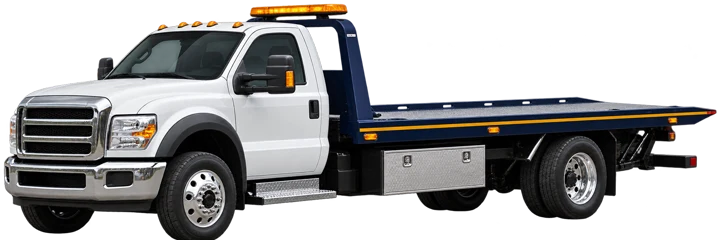
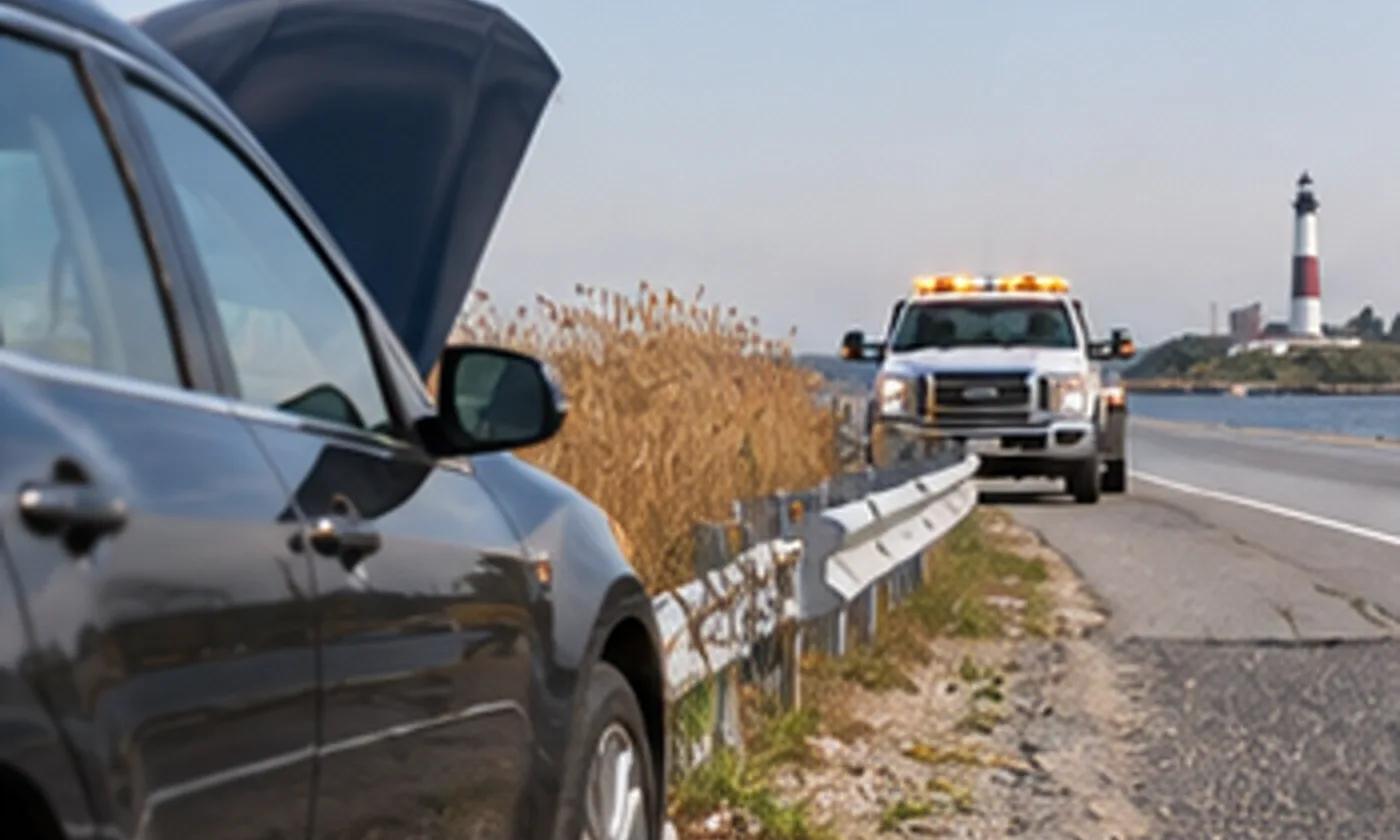
Handle immediate danger first
Call 911 for injury, fire, a hazardous spill, or a vehicle blocking active traffic. Follow police, fire, and roadway-authority instructions. Do not stand in a live lane or inspect damage from an unsafe position.
Give a usable roadway location
Provide the road name, direction of travel, nearest cross street, exit, landmark, shoulder, ramp, bridge approach, or parking area. A dropped map pin should be supported with words that identify the correct side of the road.
Describe what the truck will meet
Report collision damage, wheel and suspension condition, fluid leaks, deployed airbags, locked steering, missing keys, and whether the vehicle can roll. These facts affect the equipment discussion.
Prepare the receiving point
Choose a repair facility or other authorized destination that can accept the vehicle. If an agency has already removed it, contact that agency or storage facility rather than requesting a second tow.
Have these details ready
- Vehicle year, make, model, and condition
- Exact pickup entrance and vehicle position
- Access limits, keys, wheels, and steering
- Authorized destination and receiving instructions
Call (516) 271-1927 for a new request. Availability, equipment, timing, and the complete job-specific quote are confirmed before dispatch.